Community
Share your thoughts, experiences or questions and participate in discussions over our favorite topic : SCUBA diving!
Posts by:

-
 Phil
Phil -
 PADI Open Water Scuba Instructor
-
Qualifications:
PADI Divemaster, PADI Rescue Diver -
Dived in: US Virgin Islands, United States, Bahamas, Mexico, Dominica
Becoming a PADI Instructor: Update
by Phil on November 12, 2013
So, as a lot of you can tell my posts kind of died out and there is a reason for that. I found that logging the process wasn't helping me retain the information as well as I had hoped. So I decided to abandon it in search of a better way to study that would allow me to retain the information better.
I've had good success with going through the PADI workbook as well as using the idc-guide website to review the information. I've also been using the information when giving my speeches helping out at the dive shop for OW and AOW courses. Rainbow Reef also provides a great resource that is an online quiz/testing system that formats questions in the format that PADI will during the IDC covering...
Becoming a PADI Instructor: Gases (Part 1)
by Phil on July 17, 2013

Welcome back to my "Becoming a PADI Instructor" Blog Series yet again...are you getting sick of me yet? Let's talk about Gases!
Dalton's Law
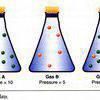
Dalton's Law states: the total pressure exerted by the mixture of non-reactive gases is equal to the sum of the partial pressures of individual gases. What the heck does that even mean? For the sake of simplicity and examples throughout this series we'll consider air 21% oxygen and 79% nitrogen (Ignoring traces of Neon, Krypton, Hydrogen, Xenon Radon, Carbon Monoxide, Argon, and Carbon Dioxide).
Think of 1 bar / atmosphere as 100% of a gas mixture. In air you have 21% Oxygen + 79% Nitrogen = 100% of Gas Mixture. In terms of partial pressures it is...
Becoming a PADI Instructor: Bouyancy
by Phil on July 11, 2013

Welcome back to my "Becoming a PADI Instructor" Blog Series! Let's talk about buoyancy!
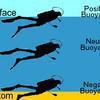
Let's start with an interesting tidbit of information. I've said it myself and I've heard other say it when people ask "What is Scuba diving like?", we often respond "It's like being an astronaut floating around weightless in space!" and everyone gets really excited. The excitement is real but the weightless statement is not. Even underwater earth's gravity continues to pull down on you as if you were on the surface. This is why you can still feel whether you are upside down or right-side up underwater. An astronaut does not have these feelings. ...
Becoming a PADI Instructor: Physics
by Phil on July 08, 2013

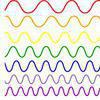
The Physics of Diving (Heat / Light / Vision / Sound)In this section of my "Becoming a PADI Instructor" Blog Series, I am going to be focusing on the Physics of Diving. This section and the Physiology section is where I'll probably be spending the majority of my time as I was told by most of the instructors I've talked to that if I have those two sections down well the rest should be fairly easy. I'm mostly using the PADI Encyclopedia of Recreational Diving and IDC-Guide for my research. Otherwise I'm using Google to find academic resources to get a greater understanding of things I want to learn more about.
Water & Heat ...
Becoming a PADI Instructor
by Phil on June 24, 2013

So I've decided to finally make the leap to becoming a PADI Instructor. It is my nature to over-prepare for everything I attempt in life so naturally I booked my IDC/IE for December of 2013. I will be diving with The Rainbow Reef Dive Center based in Key Largo, Florida.I've been diving for four years now and have logged a couple hundred dives since then. I've been a PADI divemaster for going on two years now. I have been holding off on getting my instructor because everything I've read has told me that there is no money in it and it is hard to find a job. Although those claims may or my not be true; it has stopped me previously from pushing myself to the next level and I've felt a deep...
I can barely feel my lips
by Phil on April 29, 2013

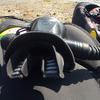
I've been diving for around 4 years and I've logged hundreds of dives. I work part time as a Divemaster in Iowa. Iowa diving does not offer what people would consider 'warm water diving.' Warm water in the Midwest means around 70 degrees Fahrenheit maximum! On average when certifying students the water is between 45 and 70 degrees which requires two piece 7mm suits most of the season (I can only imagine the pain of those divers up north in Canada!)While a two piece 7mm suit will keep you fairly warm, one thing that is hard to keep warm is your lips. I was unaware of any solution to keeping my lips warm outside of a full face mask; which would require additional training as well as quite a...
Share your experiences, thoughts, or ask a question |
| WRITE A POST |
Join Diveboard

 Becoming A Padi Instructor: Gases (Part 1)
 Becoming A Padi Instructor: Bouyancy
 Becoming A Padi Instructor: Physics
 Becoming A Padi Instructor
 I Can Barely Feel My Lips
 We are participating today in the startup contest Techcrunch Disrupt. Support Diveboard by voting for us!